

Passing the Violet Torch
Congratulations to our Fall 2024 Food Studies Graduates!


Hello Food Scholars and Happy New Year!
I hope the holiday season has gifted you peace and a full belly!
In this interim period between the end of one chaotic semester and the looming arrival of the next, I, like many of you, have been balancing reflection with planning in preparation for the year ahead. The break has offered a relaxing opportunity for me to read (for pleasure! gasp!) and among the stack of non-school related books I’ve escaped to, one passage felt particularly destined to reveal itself during this transitionary season.
In Crying in H Mart, a memoir by indie rock musician Michelle Zauner, she recalls a conversation with her aunt, posing a self-reflective riddle I’d like to share:
You’re going on a journey and you have five animals.
A lion.
A horse.
A cow.
A monkey.
And a lamb.
On this journey there are four stops where you have to give up one animal. In the end, you can only keep one.
Which one do you give up first?
Which one do you keep?
[Take a moment to reread/answer.]
Each animal symbolizes your priorities in life. What you give up first is least important while what you keep for last is your highest priority. The lion represents pride. The cow represents wealth because you can milk it. The horse represents career because you can ride it through. The lamb is love, and the monkey is your baby.
While life choices cannot be scientifically linked to one’s preference for barnyard or zoo animals, the broader notion of this assignment corresponds with the various paths we will all take as we make our way through and beyond the Food Studies program. The end of each semester marks a new stop along our journey where we say goodbye to another cohort of graduates. Lucky for us, this parting is celebrated with capstone presentations where graduating students pass on diverse ideas that influence our own pursuits in the program. Because none of our paths overlap in exactly the same way, the capstone presentations provide tangible points of contact for our peers to share knowledge. These exchanges cultivate creativity and community, connecting one food scholar to the next.
As I prepare to enter my last semester in the Food Studies program, I look to December’s graduates for guidance. The following capstone presentations are just a few of the intelligent and creative routes this master’s degree has inspired. Personally, they remind me that our journeys aren’t determined solely by the books we read or the classes we take, but by the peers that sit beside us, bringing new personalities and insight into each conversation.
Kul NYC: Celebrating Arab-Owned Restaurants and Re-Defining “Middle Eastern” Cuisine
by Dana Sultan
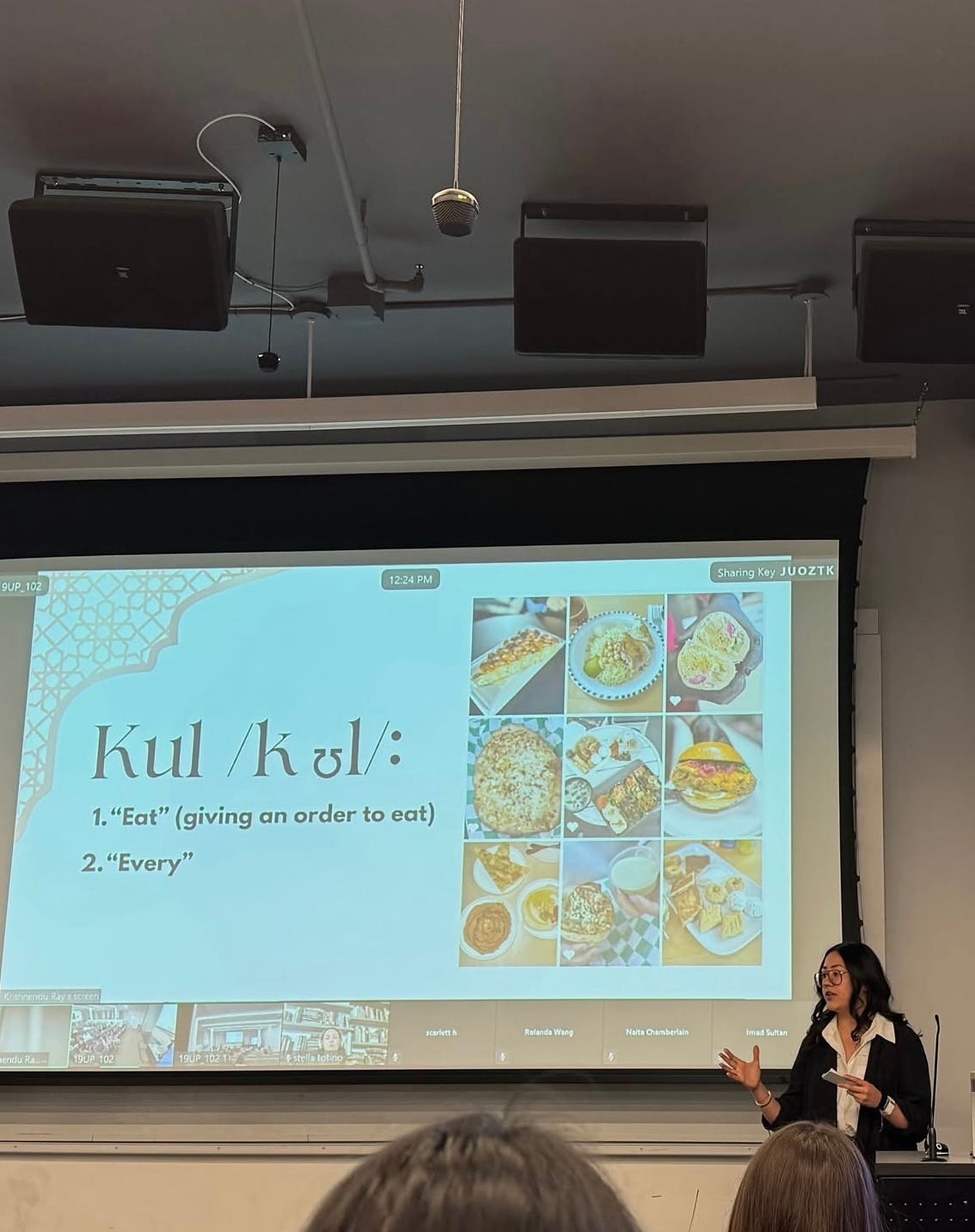
Kul NYC is a digital platform dedicated to celebrating and promoting Arab-owned food businesses and restaurants in New York City. The project aims to dismantle the generic label of “Middle Eastern food” by highlighting the unique cuisines of each individual Arab country. Through interviews with business owners and storytelling, Kul NYC uncovers the challenges these establishments face, such as limited representation, old-school marketing practices, and cultural misunderstandings. By leveraging Instagram and TikTok, the platform creates a space for Arab cuisine to thrive, fostering greater understanding and appreciation of Arab food culture among New Yorkers. The project ultimately aims to use food as a medium for cultural education and cultivating connections between communities.
You can follow Kul NYC on Instagram and TikTok at @kul.nyc.
A Digital Archive of Bangladeshi Food in the Diaspora
by Israt Abedin
Traditional archives have long reinforced hierarchical structures, such as favoring the preservation of written records and ignoring the records of the most marginalized in society. This project seeks to address these issues of and within traditional archives through the lens of reparative archival theory by collecting oral history interviews from women of the Bangladeshi diaspora in North America. Primarily, these interviews uncover these women’s relationship to Bangladeshi food, how they preserve and create Bangladeshi food, how they perceive regionality in the cuisine, and more. As oral history is one of the ways many communities of color like Bangladeshi communities pass down traditional knowledge, the digital preservation of the audio recordings, transcripts, and photographs combine this traditional method of storytelling while simultaneously providing access to this knowledge to a wider audience. Themes of memory, health, identity, regionality, gender, and more are explored within these interviews. Combining archival methodologies with food studies research, this archive will serve as a valuable primary source, not just to members of the Bangladeshi diaspora, but scholars and researchers of food studies, immigrant and diaspora studies, and South Asian studies.
Below is a soundclip from an oral history interview conducted by Israt:
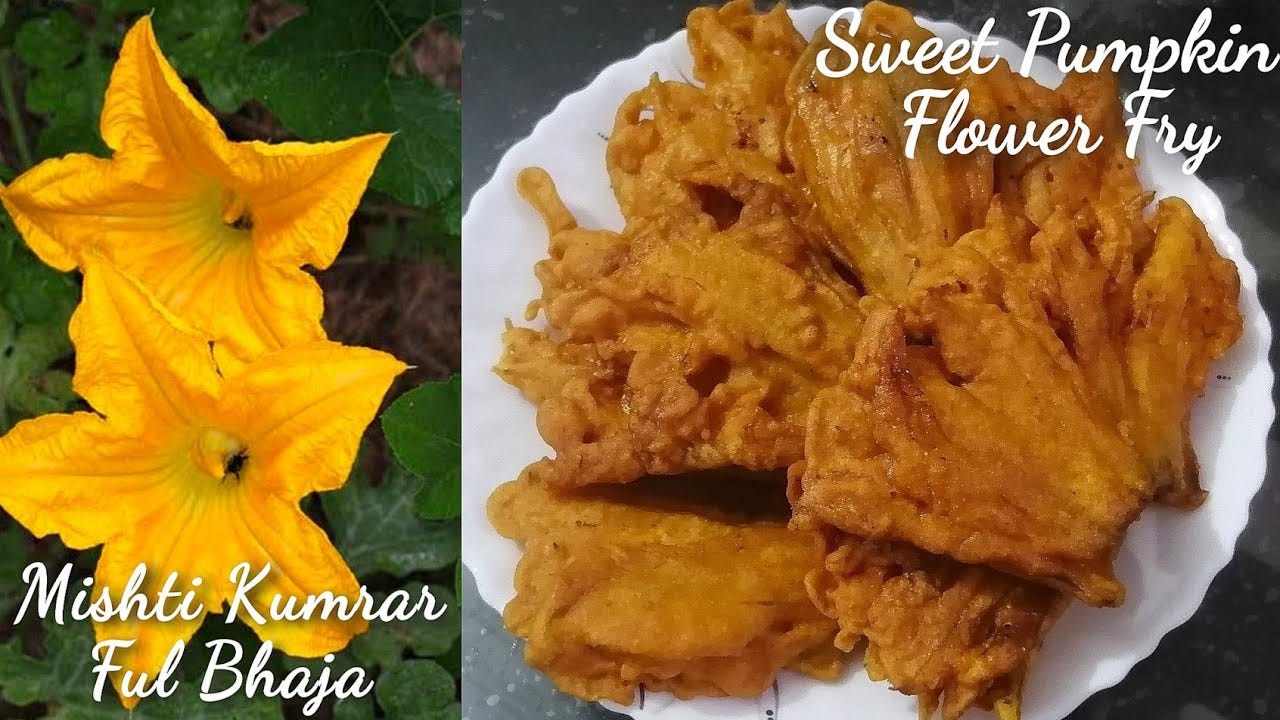
You can find the rest of Israt’s capstone presentation here or explore her digital archive here.
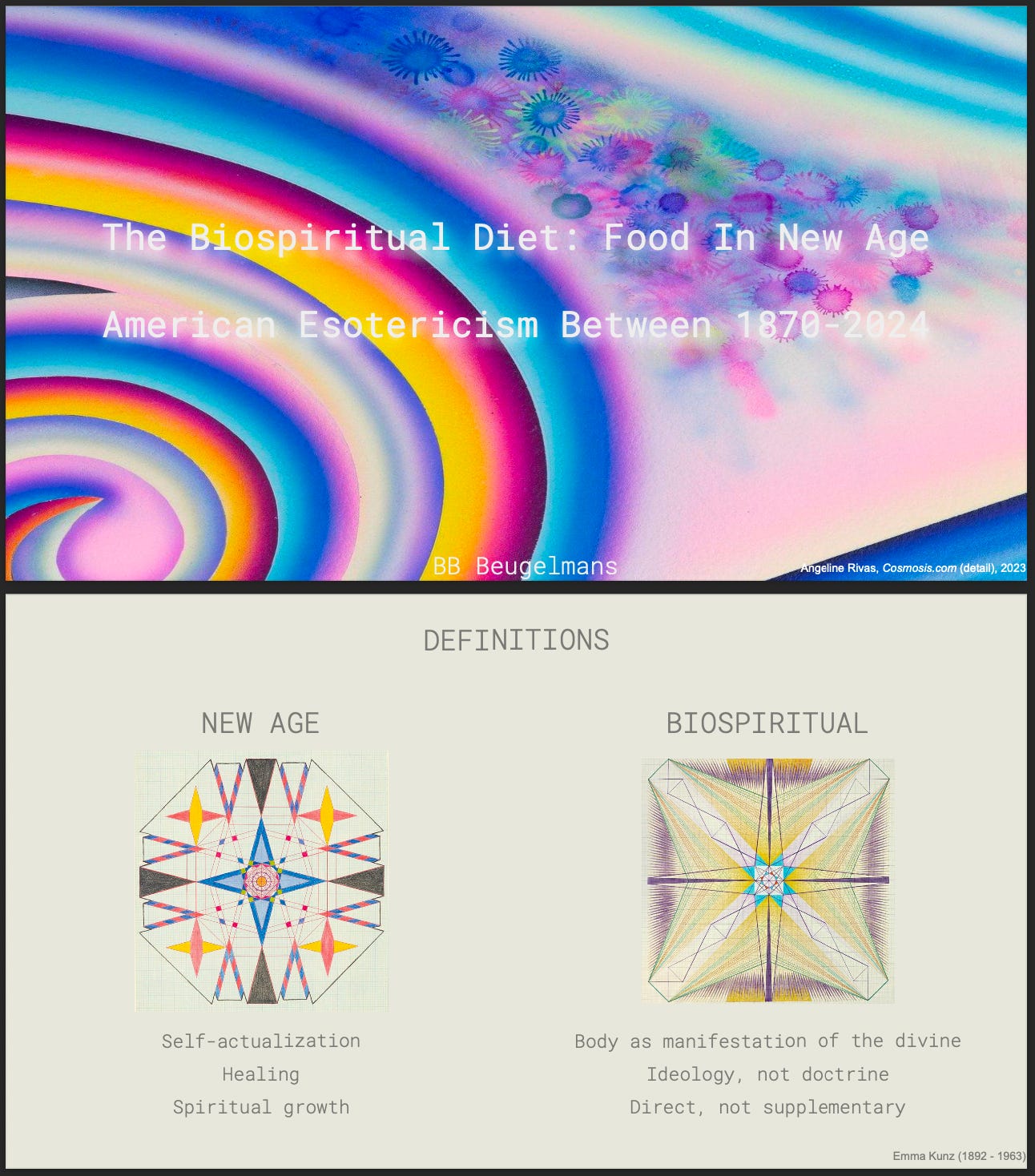
The Biospiritual Diet: Food In New Age American Esotericism Between 1870 and 2024
by Beatrice Beugelmans
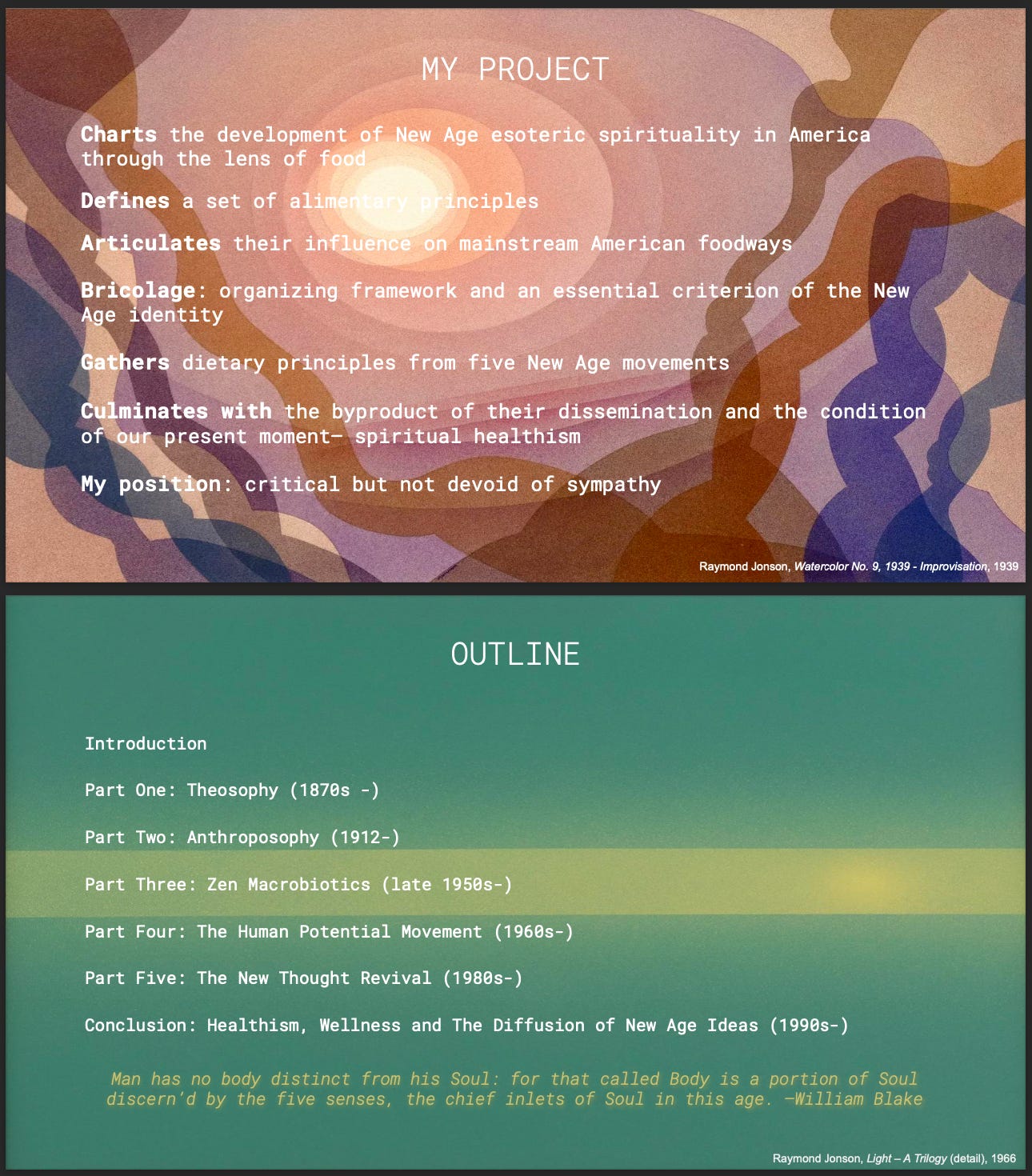
This project charts the development of metaphysical spirituality in America from 1870-2024, through the lens of food, defining a set of unifying alimentary ideologies and articulating their elusive yet immense influence on mainstream American foodways. Embracing the theme of bricolage as both an organizing framework of study and an essential criterion of New Age identity, this project weaves together dietary principles from five movements – Theosophy, Anthroposophy, Zen Macrobiotics, The Human Potential Movement, and New Thought – culminating with the disseminative movement I call ‘spiritual healthism.’ Spiritual healthism is the logical conclusion of over a century of biospiritual momentum, a combinatory movement which links not only morality and physical health, but spirituality and wellness.
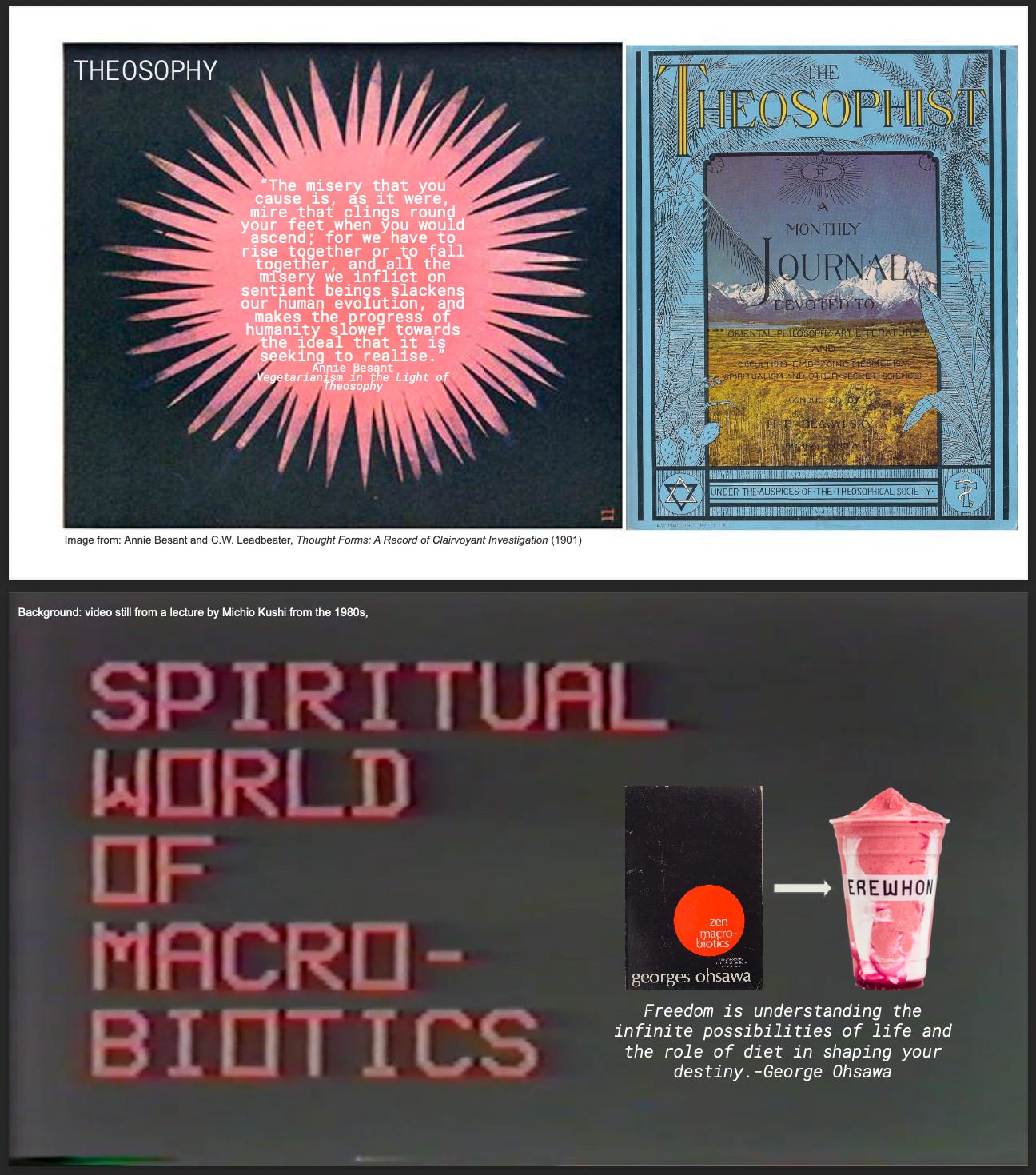

Beatrice plans on developing this project further with the guidance of Professor Krishnendu Ray. For now, she is focused on continuing her research in Los Angeles and is currently looking into grants and residencies. Her end goal is to produce a book.
Beyond the Plate: Exploring Food, Labor, and Equity in South Asia’s Culinary Landscape
A Travel Study Experience by Wania Ahmed
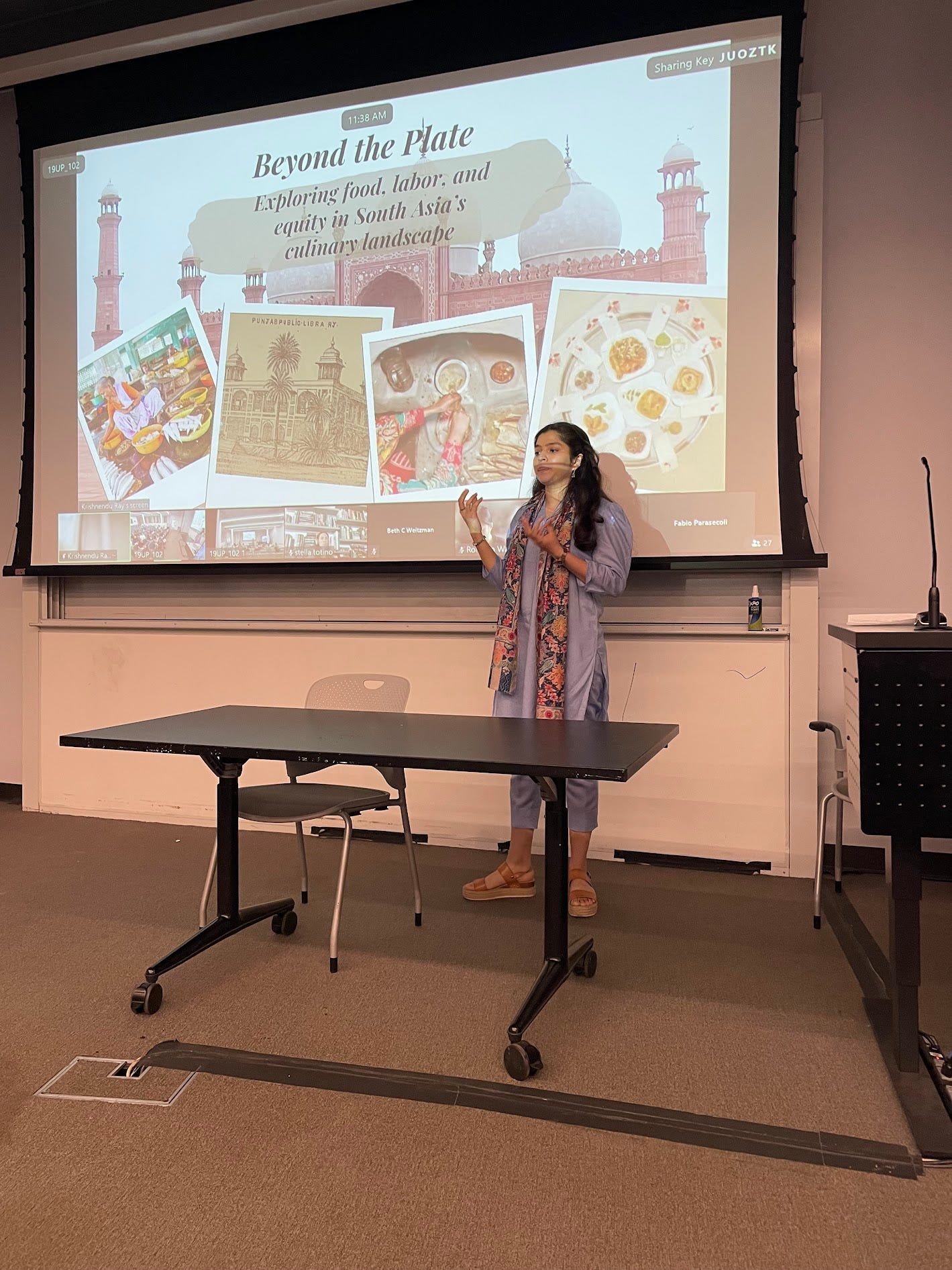
In South Asia, it is estimated that over 50 million people are employed as domestic workers, with a significant portion involved in food preparation and household cooking—yet their contributions are glaringly absent from cookbooks, TV shows, and the stories of home-based restaurants. These culinary traditions, celebrated globally, are often built on the backs of these workers, whose labor remains invisible and unacknowledged. Wania is designing a study abroad course that will take students on an immersive journey through Pakistan’s vibrant culinary landscape. This course highlights the untold stories of domestic workers who have quietly preserved and shaped South Asia’s rich food traditions—contributions that are often overlooked.
Through hands-on experiences like cooking sessions, market visits, observation and discussions with domestic labour in a multitude of culinary settings, students will explore the deep connections between food, labor, culture, and social structures. Allowing them to learn the process of visual ethnographies and qualitative research, critically examining the intersections of labor, class, and gender in the food system.
As someone who grew up in Pakistan and has a background in food studies and social justice, Wania feels a personal and academic connection to this project. Her goal is to bring visibility to the labor that sustains food systems, challenge traditional food narratives, and inspire students to think critically about these hidden dynamics. This course will encourage future food scholars and policymakers to advocate for inclusivity, fair labor practices, and cultural respect, equipping them with tools to create a more equitable food system.
Congratulations Dana, Israt, Beatrice, Wania and the rest of the December 2024 Food Studies graduates! I speak on behalf of the entire program when I say we will miss each and every one of you, but look forward to seeing the exciting things that you will do throughout your careers! I hope that this Substack provides a platform for us to all stay in touch.
 |
|